From nurturing life to preserving heritage, soil shapes our world in ways both sacred and practical.
Originally featured on Soil & Soul Substack.
There’s a small section tucked away behind the vegetable garden, a patch of bare earth, sectioned off with some chicken wire. Crouching down, I mound the soil around the potatoes we’re planting there in the community garden, each one dotted with knobbly white roots – the first signs of new life. The soil is dry from the summer sun but the lupins, now withered and spent, have left it rich with nitrogen. It’s an incredible cycle of renewal. As one plant fades, making room for the next, it enriches the earth for new crops to come.
Sprinkling a layer of dark, crumbly compost, once kitchen scraps and garden waste, onto the ground, we are very much part of that cycle, returning nutrients to the earth so that we can harvest and eat its produce. In the distance, the edges of the sky against the Tararua Ranges are turning tangerine orange, dusty like the soil, as the sun sinks over the horizon. I think back to all the years I spent living at the heart of cities, where my feet never touched the bare earth, and thick grey concrete surrounded me day and night. I could go a whole year without witnessing the seasons change, with no trees to mark their passing.
A chicken pokes its head through a gap in the wire fencing and pecks at the soil, pulling up tiny creatures I can’t see. There’s a whole world beneath the surface, billions of microorganisms sustaining the cycle of life, each playing their part in an ancient, intricate web.
In the city, we forget about the soil holding us, buried deep beneath the concrete slabs. Even the ground around the trees, slotted into neat squares along the pavements, are caked over with some sort of spongey synthetic material, hiding it from sight. When we forget about the soil for long periods, we forget about the reciprocal relationship we have with the earth. We become robotic, binary, mechanic, buying our exotic fruit and slabs of cured meat from neon supermarkets in tightly sealed packages. We forget that life is an organic flow of unfolding chance and spontaneity. We no longer glide like the water that winds through the forest banks. Instead, we, and everything around us, moves in straight lines – cars speeding down angular roads, people striding along sidewalks, making sharp turns. Our bodies become constricted, anxiety creeping in as we move through a world that feels increasingly disjointed and disconnected.

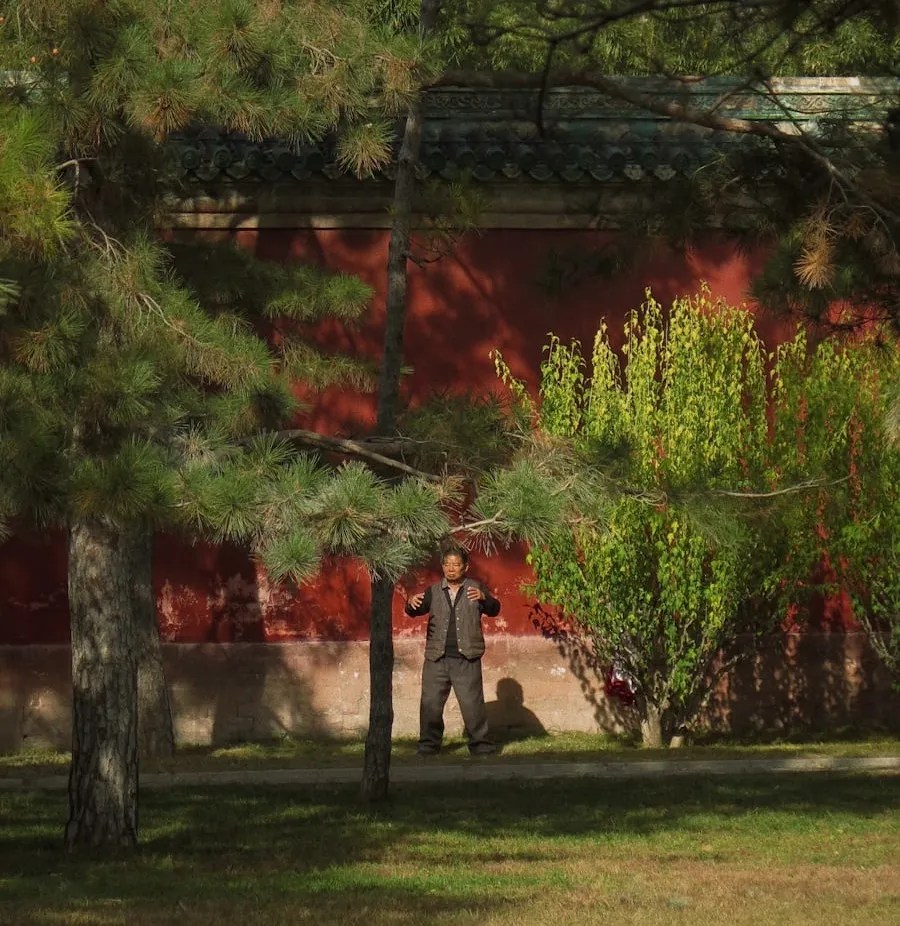
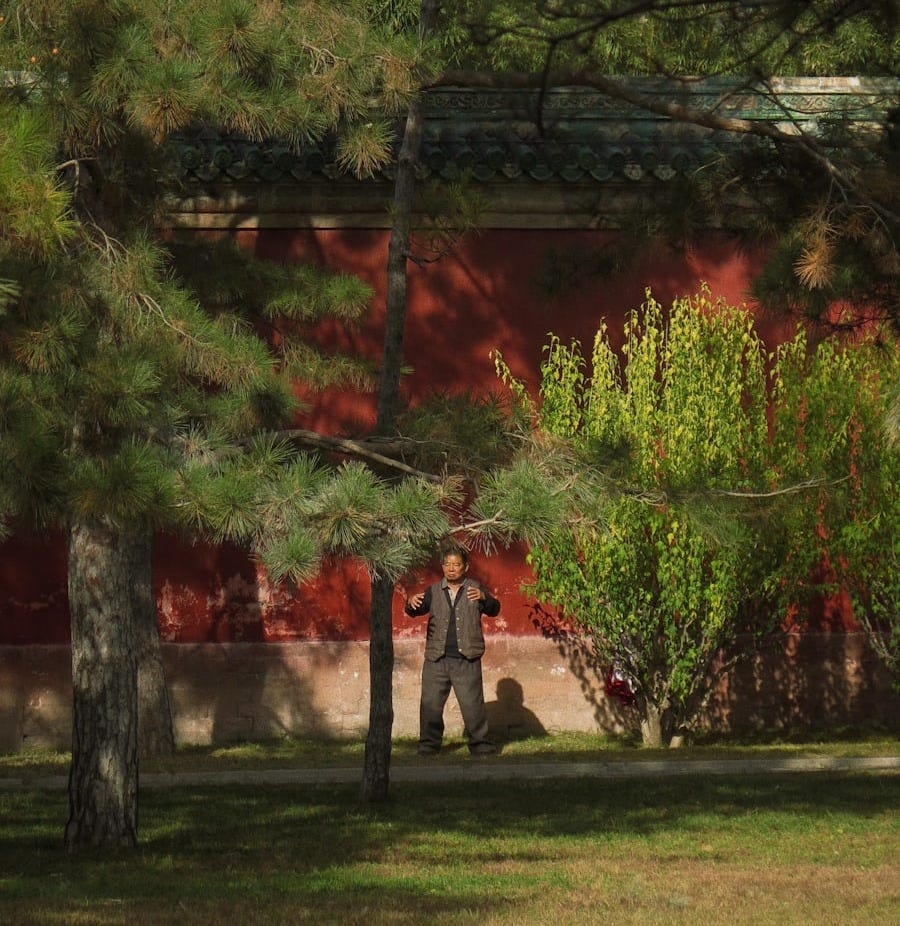
Occasionally, something or someone reminds us of the free-flowing, organic nature of life, of movement untethered by rigid lines or fixed structures. An elderly man stands on the edge of a park, raising his hands gracefully in the air, floating them outwards and back again in circles, slowly spinning clouds. In a small basement theatre, a group of actors perform in an improv show, adapting and responding to each other’s energy without a second thought. A few blocks down, a circle of strangers surrender to the impromptu rhythms of ecstatic dance, expressing the freedom of movement through their bodies.
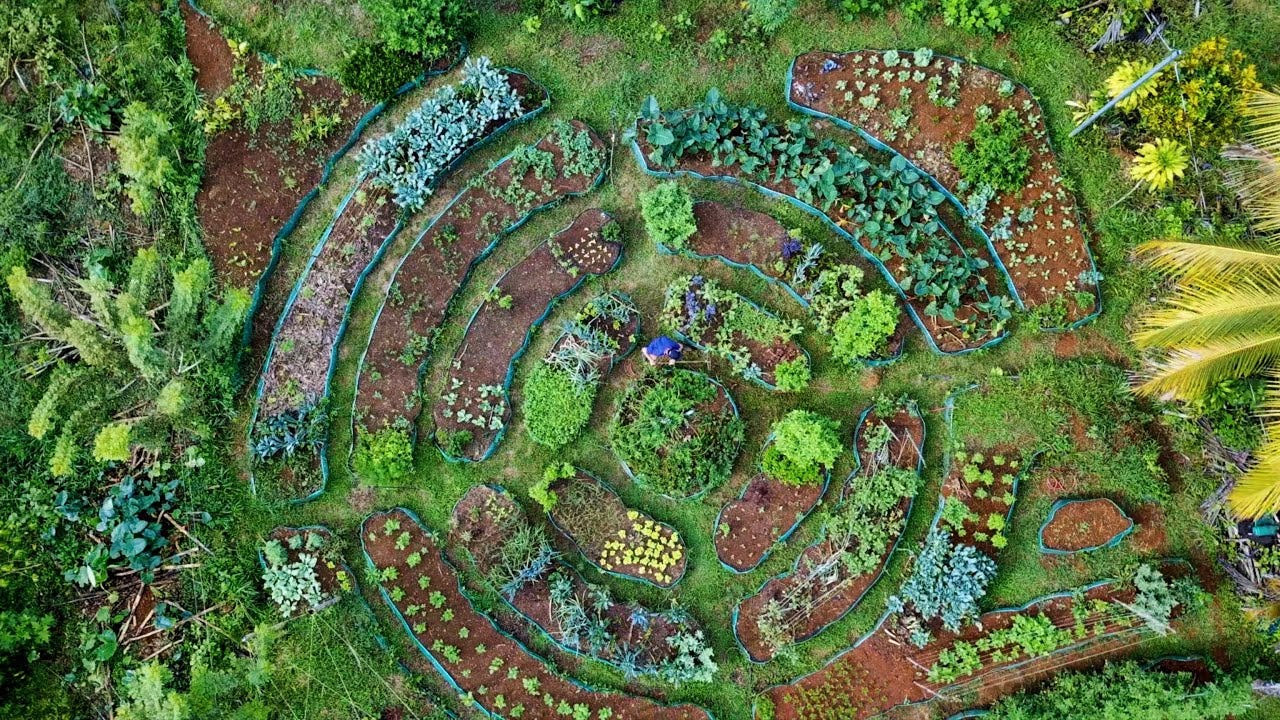
In this space of embodied, organic flow, things are often messy. Movement is unplanned, outcomes unexpected. Nature does not grow in neat boxes but in sprawling tangles – roots twisting through the earth, vines spilling over bushes, fungi threading unseen networks beneath our feet.
During a recent permaculture course I enrolled on, participants were invited to redesign their existing gardens, predominantly ornamental, lawned structures, into productive zones. When you start to see land as something fertile and full of possibility for life rather than a passive backdrop, the concept of garden lawns becomes increasingly more bizarre.
In the book Edible Estates: Attack on the Front Lawn, American artist and architect Fritz Haeg wrote, “The front lawn is so deeply embedded in our national psyche that we don’t really see it any more, at least for what it actually is. What is that chasm between house and street? Why is it there? Or rather, why is nothing there?”
In 2005, Haeg’s Edible Estates project sent a suburban American neighbourhood into turmoil when he ripped up one of the home’s neat lawns with a sod cutter, and began replacing it with a functional, edible garden. Messy patches of kale, tomatoes, and wildflowers stood out like a sore thumb against the surrounding manicured grass and neat flowerbeds.
Haeg explains: “The Edible Estates project proposes the replacement of the domestic front lawn with a highly productive edible landscape. Food grown in our front yards will connect us to the seasons, the organic cycles of the earth, and our neighbors. The banal lifeless space of uniform grass in front of the house will be replaced with the chaotic abundance of biodiversity. In becoming gardeners we will reconsider our connection to the land, what we take from it, and what we put in it.”
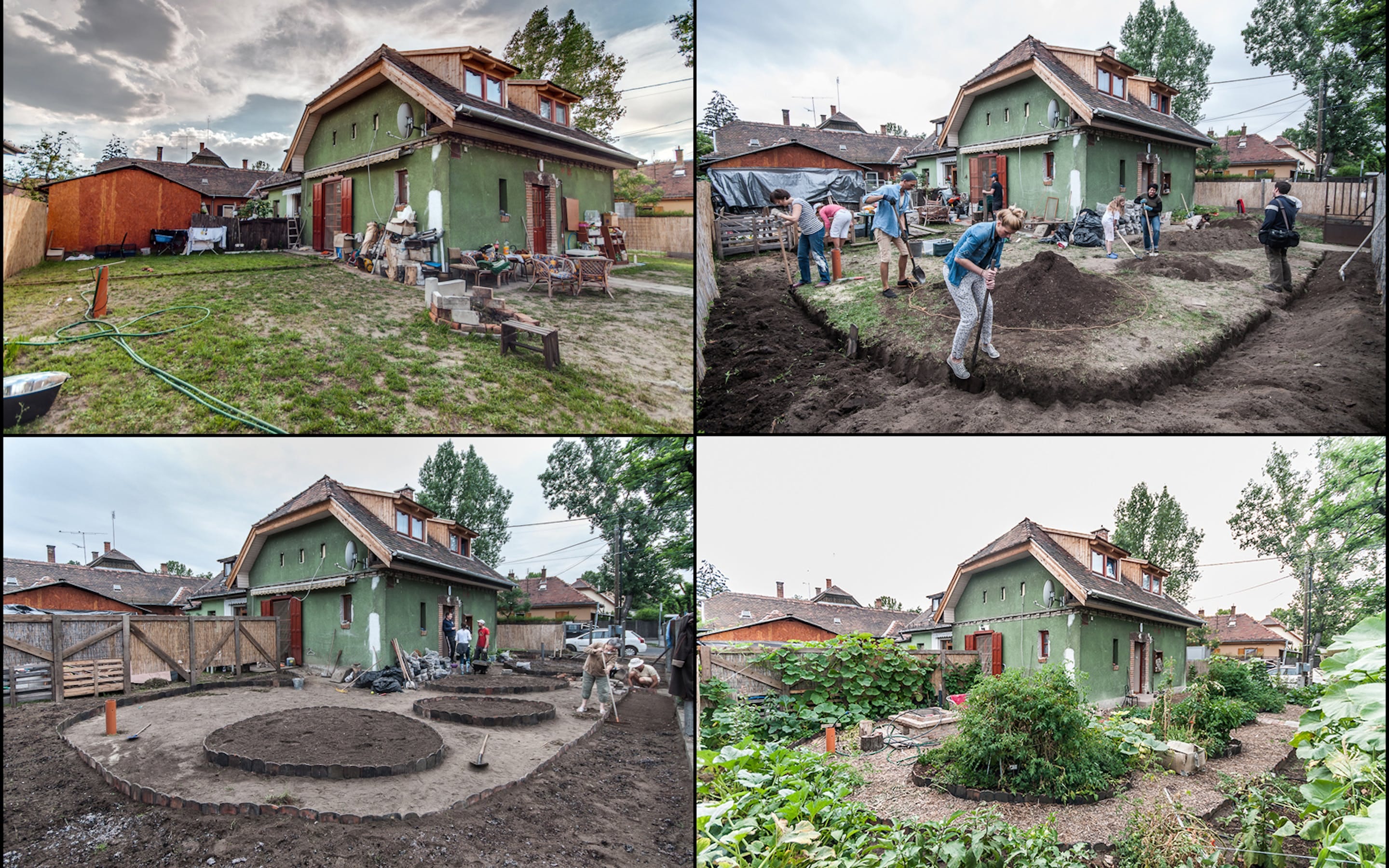
This act of rebellion—ripping up the front lawn to plant food and disrupting the mundane, passive order of suburban life – was more than a statement about food production. It was a challenge to how we see land itself. For Haeg, the uniform, neatly trimmed lawn symbolises our disconnection from the soil. Replacing it with edible plants, he invites us to reconsider our relationship with the earth beneath our feet.
I came across a book recently in my local library that expands on this idea: Field to Palette: Dialogues on Soil and Art in the Anthropocene. It explores not just the scientific, tangible aspects of soil—as a vital component of agriculture, biodiversity, and sustainability—but also its cultural meanings and symbolic representations. In doing so, it looks at how artists have interpreted soil through six core functions:
1. Sustenance – provider of food, biomass, all forms of nourishment
2. Repository – source of energy, raw materials, pigments, poetry
3. Interface – site of environmental interaction, filtration, transformation
4. Home – habitat, biological hotspot, gene pool
5. Heritage – embodiment of cultural memory, identity, spirit
6. Stabiliser – platform for structures, infrastructures, socioeconomic systems.
Exploring and reconnecting with the more symbolic aspects of the earth is important, not just for fostering greater respect for the land, but also helping deepen our understanding of ourselves and our place within the natural world. In contemporary life, particularly in the urban West, there’s a tendency to reduce our understanding of the world to the material and literal. We’ve lost touch with the spiritual and symbolic dimensions of existence, which once helped people connect with the world, and themselves, on a deeper level.
Early civilizations were deeply symbolic, understanding their existence through myth, ritual, and metaphor, viewing the world not as isolated parts, but as a deeply interconnected whole. These symbolic ways of thinking allowed them to represent and understand the relationships between humans, nature, and the divine.
In Hopi culture, Kokyangwuti or “Spider Grandmother” is an important spiritual figure associated with creation, agriculture, and fertility. Often depicted as an old woman or a spider, she is said to have woven the world, with the threads of her web connecting all beings, humans, animals, nature, and the spiritual realm, into a unified whole. This imagery symbolises the interconnectedness of all life, suggesting that everything is part of a larger, intricately woven pattern.
This symbolic way of understanding the world can also be seen through ancient languages like Irish, which are more conceptual than modern, noun-driven languages such as English. Manchán Magan, an Irish writer and speaker, has explored how the Irish language is rich in metaphor and subtle nuances, reflecting a deeper, more poetic connection to the world.
For example, in Irish, things are often described in terms of their relationships to other things or their essence, rather than merely being named. A tree (crann) isn’t simply a “tree”; it might be described as a “sheltering tree” or a “tree of the forest,” reflecting its connection to the environment and its role in the ecosystem. This conceptual nature of Irish encourages a worldview that is deeply intertwined with the land, nature, and the symbolic relationships between all things. In contrast, modern languages like English, which focus more on the object itself, often miss these subtler, interconnected meanings. This shift from metaphorical to material understanding marks a broader cultural shift, one that has distanced us from the deeper, symbolic meanings inherent in the land and the soil beneath our feet.
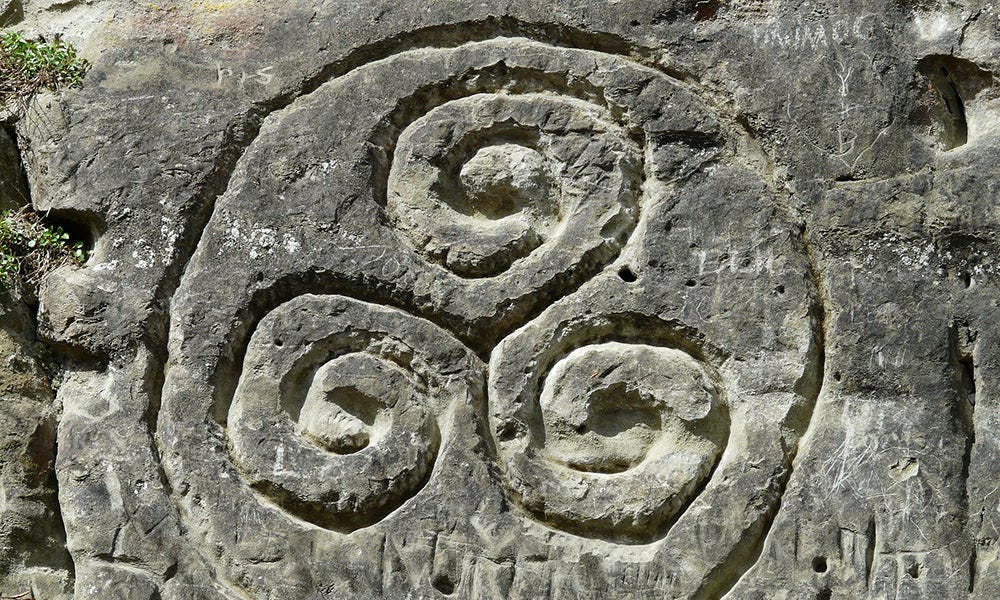
In rediscovering our connection to soil, we are not simply returning to farming or gardening but reclaiming a deeper relationship with the land that shapes us. By embracing the symbolic and cultural meanings of soil, its role as sustainer, repository, and home, we can reconnect with the ancient wisdom that once guided our interactions with the Earth. Through this reconnection, we are invited to reconsider not just how we grow our food but how we live, move, and engage with the world around us. The soil is not just beneath our feet, it is a living, breathing entity that binds us to everything that has come before us and everything that is yet to come.
 Midtown Mocha